Vintage Flower Font: A Floral Twist on Typography
There I was, staring at a blank brand board, trying to find the right visual voice for a new boutique skincare line. The client wanted something elegant, natural, and a little whimsical—something that felt like it belonged in a garden but still had enough polish to work in a modern setting. That’s when I pulled out Vintage Flower, a unique dingbat font where each letter is transformed into a delicate flower design.
A Visual Language of Blooms
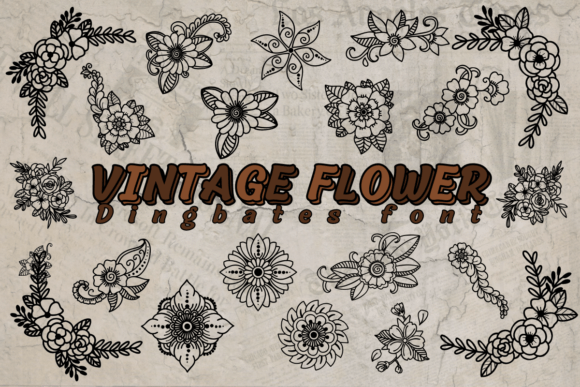
Vintage Flower isn’t your typical typeface. Instead of letters, it uses intricate floral illustrations—each character is a small bouquet of petals, leaves, and stems. The result is a font that feels handcrafted, almost like a botanical sketchbook come to life. It has a soft, romantic personality, with a vintage charm that evokes old-world craftsmanship and artisanal quality.
The design is clean but not minimal. Each flower is detailed enough to stand out, yet not so busy that it becomes distracting. The font works best when used sparingly, as a decorative element rather than a primary text face. Its visual appeal lies in its uniqueness, making it perfect for projects that want to add a touch of personality without overwhelming the viewer.
Testing Vintage Flower in Real Projects
I first tried Vintage Flower on a logo concept for the skincare brand. The client wanted a name that felt organic and soothing, and the font fit perfectly. When placed on a mockup, it added a sense of calm and refinement that matched the brand’s ethos. It wasn’t just about the look—it was about how it made the brand feel.
Next, I experimented with it on packaging designs. On a product label, it worked well as a headline or tagline, drawing the eye with its floral motifs. However, I noticed that when used in smaller sizes, the details started to blur, making the text less legible. This made me think about where and how to use it effectively.
On a business card, it looked charming but again, only when used in short phrases. Long sentences became hard to read, which led me to consider its limitations. For instance, it wouldn’t be ideal for body text in a brochure or website copy, where clarity is key.
When to Use Vintage Flower
Vintage Flower shines as a display or accent font. It’s great for headlines, logos, and short phrases that need a bit of flair. In web design, it can be used for hero sections or title blocks, where its visual impact can make a strong impression. On social media graphics, it adds a playful, artistic touch that stands out in a crowded feed.
For editorial design, it can be a fun way to break up text or highlight key points. But even there, it needs to be used thoughtfully. Pairing it with a more traditional serif or sans serif font helps balance the design and keeps the overall layout readable.
Pairing Tips and Practical Advice
When pairing Vintage Flower with other fonts, I found that a simple serif or sans serif complemented it well. A classic serif like Georgia or a clean sans like Helvetica provided a solid foundation, letting the floral font take center stage without clashing.
It’s also important to check the font’s available styles and weights. Some dingbat fonts have limited variations, which can affect how they perform in different design contexts. If the font includes ligatures, swashes, or alternate characters, those can add extra visual interest and flexibility.
Before using Vintage Flower in client work, I recommend testing it in multiple formats—print, digital, and on different backgrounds. Seeing how it looks on a white page versus a dark background, or on a printed card versus a screen, can reveal how versatile it really is.
Limitations and Considerations
While Vintage Flower is visually striking, it’s not a one-size-fits-all solution. It’s best avoided in formal corporate branding or any project where clarity and professionalism are top priorities. Its ornate style might not resonate with audiences looking for a more straightforward or modern aesthetic.
Also, keep in mind that not all dingbat fonts are created equal. Some may have limited multilingual support or file format options. Be sure to check what’s included before purchasing, especially if you plan to use it across different platforms or in international markets.
Finally, always review the licensing terms. Vintage Flower, like any commercial font, may have restrictions on how it can be used in client projects, merchandise, or digital products. Making sure you’re compliant is essential to avoid legal issues down the line.